

The 1% Solution: Why Small Adjustments Transform Your Golf Game Faster Than Complete Overhauls
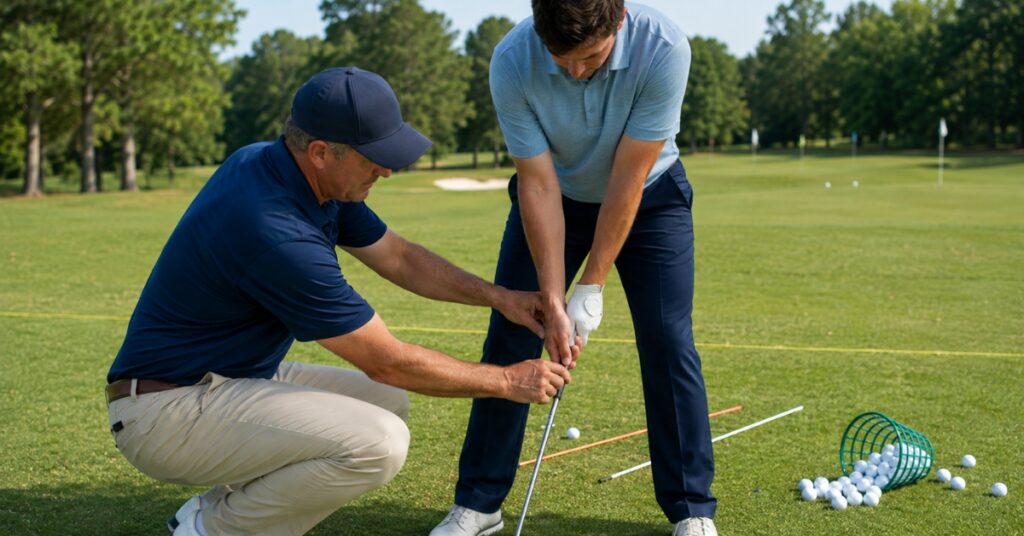
Golf instruction has a reputation problem. Mention taking lessons to most amateur golfers, and you will hear the same fear repeated in different words: “I’m worried they’ll completely change my swing and I’ll be worse than before.”
It is a legitimate concern. Too many golfers have experienced the frustration of leaving a lesson with more confusion than confidence. They are handed a long list of changes, overloaded with swing thoughts, and sent back to the course trying to remember everything at once. Months later, they are still standing over simple shots wondering whether to think about grip, posture, takeaway, tempo, or release.
For many players, the issue is not effort. It is direction. They are trying to fix too much at once.
But what if the fastest path to better golf is not a complete rebuild? What if the golfers who improve most quickly are often the ones who make small, precise adjustments instead of wholesale changes?
That is where the real stories become interesting.
At Bird Golf Academy, students consistently describe breakthrough moments that came not from reconstructing their entire game, but from identifying one or two key elements that unlocked everything else. A better setup. Cleaner contact. Improved rhythm. More confidence over the ball. These precision adjustments often create improvements that spread throughout the rest of the swing.
Why Most Golfers Stay Stuck
Many amateur golfers fall into the same cycle. They hit a rough stretch of shots and assume every part of the game needs attention. A slice becomes a grip problem. Chunked irons must mean the backswing is wrong. Missed putts turn into a putting overhaul.
Soon they are trying to change five things at once.
Golf rarely rewards that approach. The harder players chase ten different solutions, the harder it becomes to trust any one of them. Instead of building confidence, they create more noise.
That is why many golfers work hard without seeing progress. They are not lazy. They are not incapable. They are simply solving the wrong problems in the wrong order.
The Power of One Small Change
Sometimes progress arrives through one simple adjustment.
Karen arrived uncertain whether the investment would truly improve her game. As the school approached, she admitted becoming skeptical about whether it would be worth it. By the end, her perspective had completely changed after working with Mary Mills. She wrote, “It definitely has because of you!” and described returning home eager to practice instead of doubting the process.
That is how improvement often works. It does not always look dramatic from the outside, but it can feel dramatic to the player.
Another example came from Dennis, who worried that meaningful instruction would require undoing nine years of habits and starting over. Instead, he found a more practical path during his golf school in California. “I have already seen noticeable improvements in my game and I’m confident I will achieve my personal golf goals in the coming season,” he noted.
That is the 1% solution in action.
Why Small Adjustments Create Bigger Results
Golf swings are connected systems. Improve one important element and several others often improve with it. Better posture can improve rotation. Better balance can improve strike quality. Cleaner alignment can improve direction. Better tempo can restore timing.
Bud offered a strong example of how meaningful adjustments can ripple through an entire game after attending his golf school in Florida. He wrote, “I am playing the best golf I have ever played and enjoying it more.” He also shared that he was hitting the ball with more accuracy, gaining distance with his short irons, and seeing improvement in both chipping and putting.
That kind of progress rarely comes from chasing random tips. It usually comes from understanding what truly matters and practicing with purpose.
Confidence Can Change Everything
One of the most overlooked benefits of targeted instruction is confidence.
When golfers stop feeling overwhelmed, they begin swinging more freely. They commit to shots. They stop steering the ball and start trusting what they are doing.
Heidi captured that shift after her golf school in Colorado. She wrote, “My goals this week were to break 50 for 9 holes and 100 for 18 holes, and to improve my short game…and I did all of those things.” She added that she left excited to spend the rest of her life playing and getting better.
That matters more than many golfers realize.
Confidence improves commitment. Commitment improves motion. Better motion improves results.
Nicole described a similar turning point after her four days in California. She wrote, “The 4 days of awesome one on one golf instruction has made a huge difference in my game.”
Those moments can completely reset how a golfer feels about the game.

Better Golf Without Starting Over
Some golfers assume they need to tear everything down and begin again. Usually, they do not.
Most players already have useful instincts, natural rhythm, and athletic patterns worth preserving. The smarter path is refinement, not demolition.
Dennis appreciated exactly that kind of approach. He admitted concern that instruction might require a complete overhaul, but instead found that the focus was on correcting tendencies rather than changing for the sake of change. He called the experience “welcoming” and said it helped him retain what he learned.
That is an important distinction. Improvement feels very different when it builds on what you already have rather than replacing it entirely.
Why the Experience Matters
Another consistent theme is the value of immersive learning.
Many golfers are used to one-hour lessons squeezed into busy schedules. That can help, but it often ends just as momentum begins.
At Bird Golf Academy, golfers frequently describe how valuable it was to spend multiple days focused entirely on improvement. That extra time allows players to understand patterns, ask questions, reinforce changes, and apply those changes on the course.
Richard summed it up this way: “We learnt more than we ever thought possible in only five days.”
That kind of momentum is easier to build when learning happens consistently over several days.
Better Practice Beats More Practice
Many golfers do practice. They simply do not always practice with direction.
Hitting balls without understanding cause and effect can turn range sessions into repetition without progress. Once players understand what they are trying to change and why it matters, practice becomes more productive.
That structure often becomes the bridge between a good lesson and lasting improvement.
Your Breakthrough May Be Smaller Than You Think
Golfers often imagine improvement must come from something dramatic. New clubs. A new swing. Endless technical changes.
Sometimes the real answer is much smaller.
One setup change that improves contact. One rhythm cue that restores timing. One short-game concept that saves several shots per round. One adjustment that helps everything else fall into place.
That is what happened for many of the golfers whose stories stand out. Karen replaced doubt with motivation. Heidi hit her goals. Bud played his best golf ever. Richard learned more than expected. Nicole felt a huge difference in her game.
Different players. Different backgrounds. Same pattern.
What This Means for You
If your game feels stuck, consider this: the answer may not be starting over. It may be finally identifying the one or two things that matter most.
That precision comes from working with instructors who have the experience to see what you cannot see. Who can watch your swing and identify not just what is wrong, but what is most wrong. Who understand that fixing everything at once often means fixing nothing at all.
At Bird Golf Academy, the one-on-one or two-on-one format gives instructors the time and focus to make those crucial observations. The multi-day intensive structure allows changes to take root. The playing lessons show whether adjustments hold up on the course, not just on the range.
This is not about shortcuts. It is about efficiency. It is about working smarter instead of just working harder.
The Path Forward
Your golf game probably does not need a complete overhaul. It needs an expert eye to identify the critical adjustments that will unlock improvement throughout your game.
That is what so many Bird Golf Academy students describe in their own words: not confusion, not overload, but clarity, confidence, and meaningful progress.
Your breakthrough may be closer than you think. It may simply be waiting for the right small adjustment at the right time.
The question is not whether you can improve. The question is whether you are ready to stop trying to change everything and start fixing what actually matters.
