

Golf in Oregon with Bird Golf Academy: Playing the Land, Not Just the Swing
There’s a certain kind of golfer who ends up in Oregon. Not by accident, and not just because it’s another place to play.
They’re usually at a point where they’ve played enough to know that quick fixes don’t last. They’ve taken lessons, tried different approaches, maybe even seen some progress, but something still feels inconsistent. The swing might look better, but the scores don’t always reflect it.
That’s where a place like Oregon starts to make sense.
Because the game here doesn’t let you rely on surface-level improvement. It asks better questions.
What Makes Oregon Different
Most golf destinations sell predictability. Perfect lies. Clean visuals. Repetition-friendly conditions.
Oregon is not that.
Here, the courses tend to follow the land instead of flattening it out. You’ll see fairways that tilt just enough to affect your stance, approach shots that require you to factor in elevation without it being obvious, and greens that feel connected to the natural terrain rather than engineered to behave a certain way.
It’s not extreme. It’s subtle.
And that subtlety is what makes it valuable.
It’s also why Bird Golf Academy uses environments like this for instruction. Because when the course isn’t predictable, your swing can’t be either. You have to adapt.
You’re constantly making small adjustments without always realizing it at first. Ball position shifts slightly. Club selection becomes more deliberate. You start paying closer attention to how the shot needs to be played, not just how you want to swing.
Over a few rounds, that awareness starts to build.
And once it does, your game begins to change in a more permanent way.
Running Y Resort: Playing the Land Instead of Fighting It
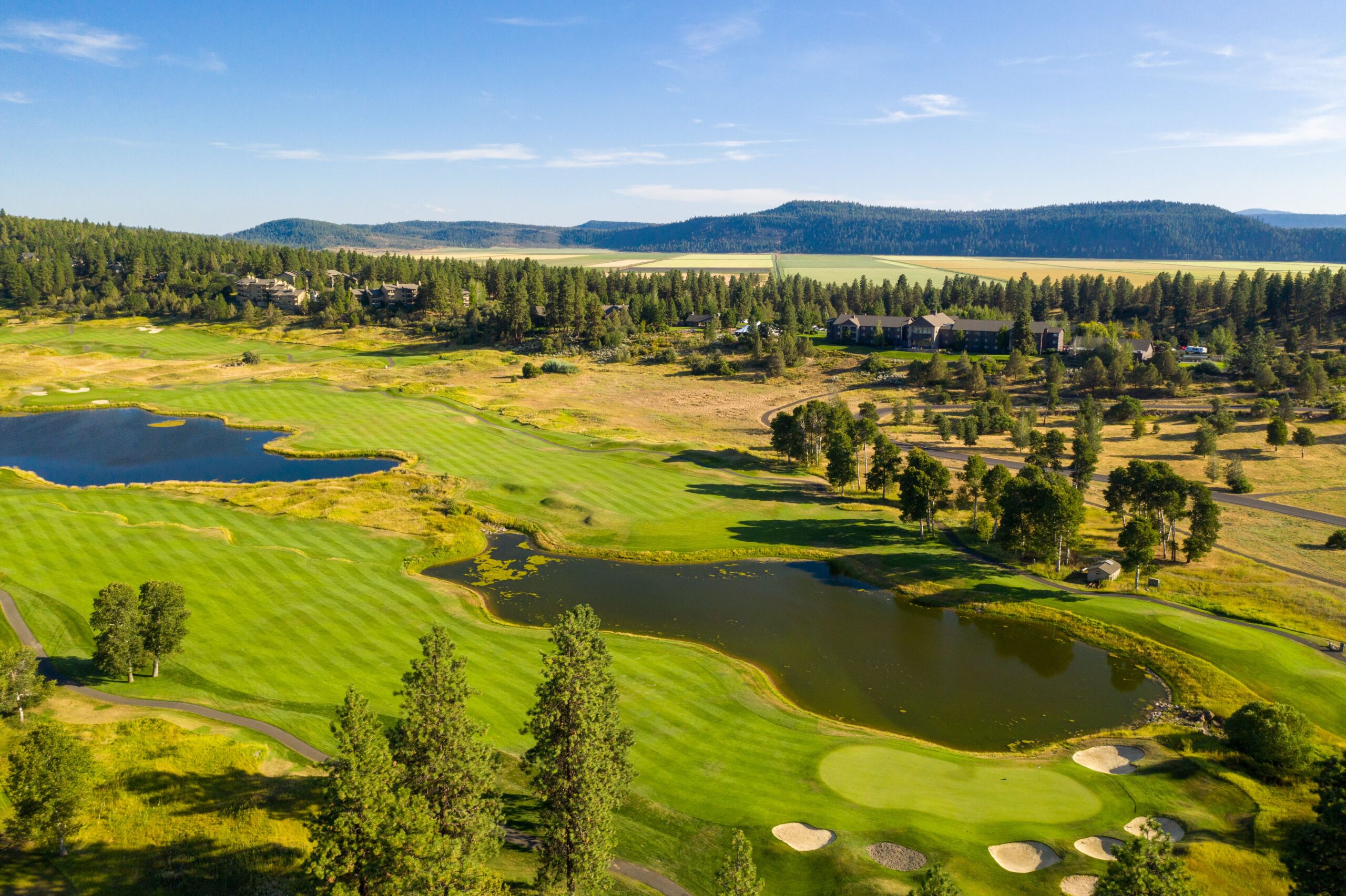
At Running Y Resort, the first thing you notice isn’t a single standout hole or signature feature. It’s how naturally the course fits into the landscape. Nothing feels forced or overly designed. The layout moves through wetlands, pine forests, and open meadows in a way that feels seamless, almost like the course was shaped by the land itself rather than imposed on it.
There’s a rhythm to it that develops as you play. The front nine feels more open and expansive, giving you space to settle into your swing and get comfortable, while the back nine gradually asks for more precision and awareness. It’s not dramatically tighter, but enough to shift your mindset and require more thoughtful execution.
What really stands out is the lack of repetition. Each hole presents a slightly different challenge. One might call for a controlled tee shot to avoid a subtle hazard, while the next opens up visually but demands precise distance control into a well-positioned green. Then you’re navigating elevation changes that influence both trajectory and rollout in ways that aren’t always obvious at first glance.
It’s not about making the course artificially difficult. It’s about creating variation that keeps you engaged and forces you to adapt.
For instruction, that’s where the value is. You’re not repeating the same type of shot over and over. You’re seeing how your swing holds up across different situations, different lies, and different visual setups.
And because the course feels so natural, the feedback is more honest. A well-struck shot behaves the way you expect it to, while a miss clearly shows what happened and why. That kind of clarity makes it easier to connect cause and effect, which ultimately speeds up the learning process.
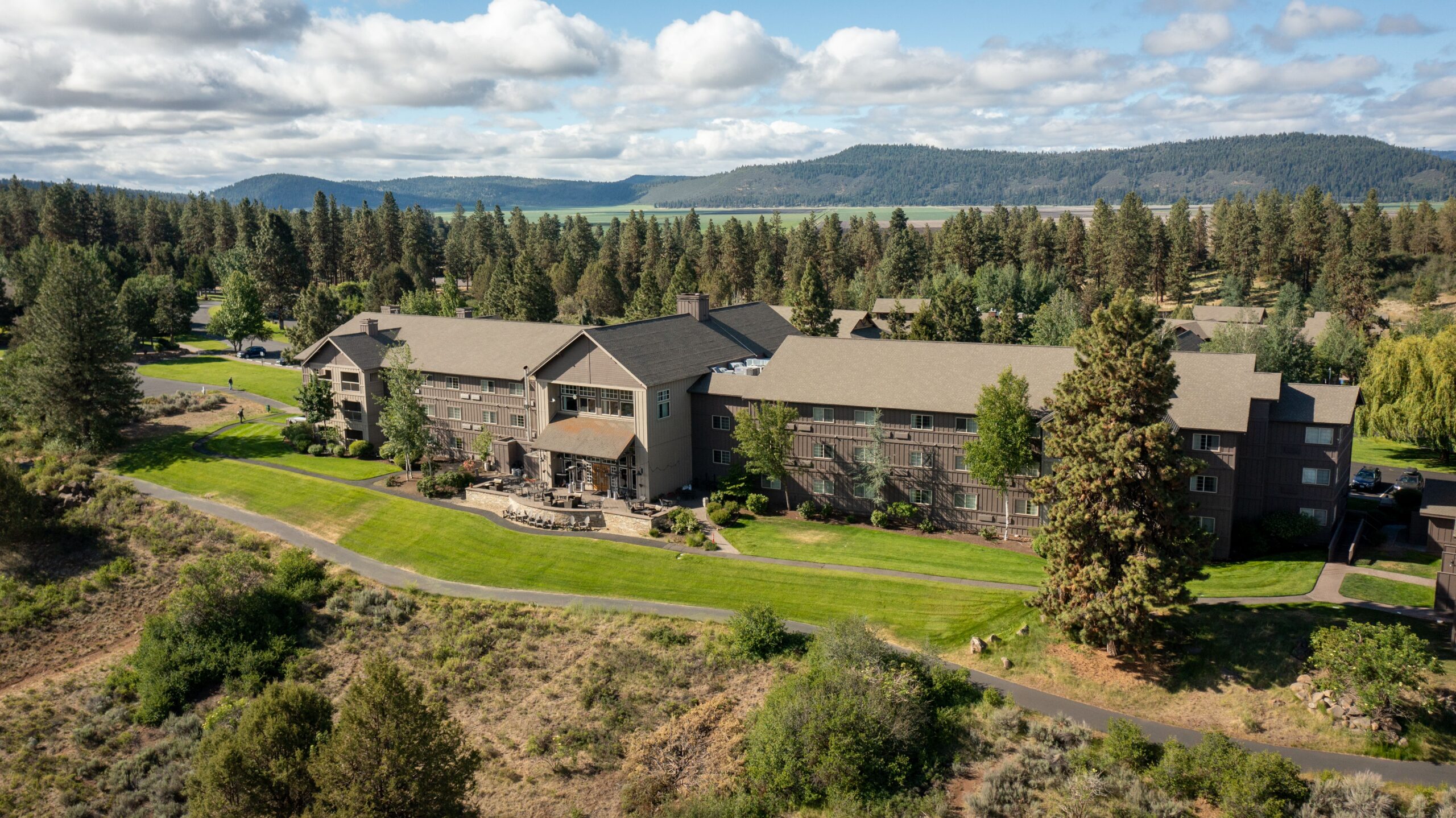
Off the course, Running Y adds another layer to the experience. The resort sits on a large, open property in Southern Oregon, with a quiet, unhurried atmosphere that makes it easy to stay focused. You’re not dealing with distractions or a packed schedule. Whether it’s the lodge-style accommodations, the surrounding nature, or simply the space to reset after a full day of instruction, everything about the setting supports the idea that you’re there to work on your game and actually absorb what you’re learning.
Eagle Crest Resort: Repetition Meets Refinement
If Running Y challenges your ability to adapt, Eagle Crest gives you the space to refine it and turn those adjustments into something more consistent.
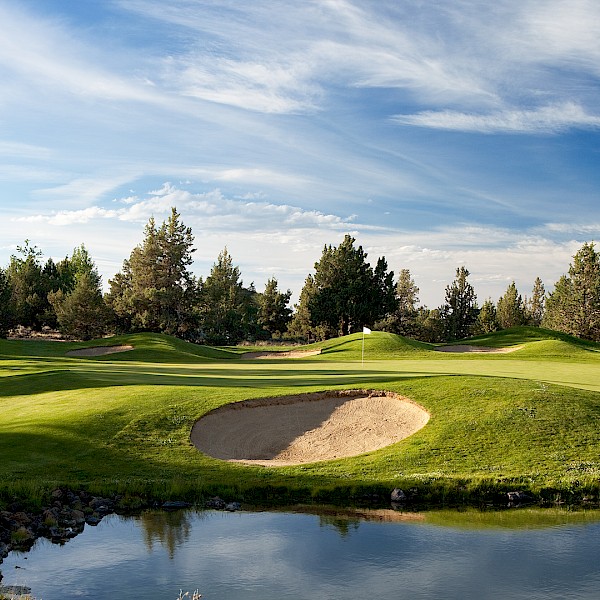
Set in Central Oregon’s high desert, Eagle Crest offers a slightly more open and structured feel. The landscape shifts to wide views, dry air, and a different pace, where the courses still present variation, but in a way that allows you to focus more directly on execution. Fairways are more forgiving in places, giving you room to commit to the swing you’re working on, while elevation changes and wind still introduce enough challenge to keep you engaged.
That balance is what makes it such an effective complement.
You’re still adjusting to real conditions, but you also have the opportunity to repeat movements and build consistency without feeling like every miss is being punished. It creates a natural progression, where the adjustments you made earlier start to feel more stable and reliable.
For many players, this is where things begin to come together. Ball flight becomes more predictable, contact becomes more consistent, and the changes you’re working on start to show up across multiple rounds, not just a few isolated swings.
Just as importantly, decision-making begins to shift. You’re no longer reacting to each shot. You’re anticipating it, choosing targets more intentionally, and committing with more confidence.
Beyond the golf, Eagle Crest reinforces that sense of continuity. The resort is spread across a large high desert property near Bend, with multiple courses, practice areas, and comfortable accommodations all in one place. It has enough activity to keep things interesting, but still maintains a relaxed, focused atmosphere. After a day of instruction, you’re able to step away, reset, and come back the next day without feeling rushed or distracted.
Why Instruction Works Differently Here
One of the biggest challenges in golf improvement is the gap between practice and performance.
A player can hit solid shots on the range, understand the mechanics, and still struggle when they get on the course. That disconnect is where most frustration comes from.
Oregon helps close that gap.
Because the conditions are less uniform, you’re forced to apply what you’re learning almost immediately. There’s less separation between “working on your swing” and “playing the game.”
At Bird Golf Academy, that’s intentional.
Instruction isn’t confined to a single environment. You’re moving between practice areas and the course, working through real situations as they come up. Your instructor isn’t just looking at your swing in isolation. They’re watching how you respond to each shot, how you think through decisions, and how your tendencies show up under pressure.
That’s where the real value is.
It’s not just about fixing a motion. It’s about understanding your game.
The Role of Environment in Long-Term Improvement
There’s a reason many golfers see short-term gains that don’t last.
They improve in controlled settings but never fully test those changes in environments that require adaptation.
Oregon doesn’t allow that separation.
The terrain, the conditions, and the way the courses are designed all work together to create a setting where improvement has to hold up under real circumstances. If something works, you’ll see it. If it doesn’t, you’ll know quickly.
That kind of feedback is difficult to replicate.
Over time, it leads to a different kind of confidence. Not the kind that comes from hitting a few good shots, but the kind that comes from understanding why those shots happen and how to repeat them.
Getting There and Settling In
Oregon also offers a different pace compared to many golf destinations.
Running Y, located in Southern Oregon near Klamath Falls, feels removed in the best way. It’s quiet, expansive, and allows you to focus without distraction. The setting naturally slows things down, which can be an advantage when you’re trying to absorb new information and make meaningful changes.
Eagle Crest, in Central Oregon near Redmond and Bend, offers a slightly more active environment while still maintaining that same sense of space. The high desert landscape provides a clean, open backdrop that complements the structure of the courses.
Travel is straightforward, but once you arrive, the shift is noticeable.
You’re not squeezing in practice between other obligations. You’re there to work on your game, and everything around you supports that.
Who Oregon Is Really For
Oregon isn’t for someone looking for a quick tune-up.
It’s better suited for players who want to understand their game on a deeper level. The kind of golfer who is willing to spend time working through details, making adjustments, and seeing how those changes perform in different situations.
It’s also ideal for players who feel like they’ve plateaued.
If you’ve been putting in effort but not seeing consistent results, a change in environment can be the thing that breaks that cycle. Not because it makes the game easier, but because it makes the feedback clearer.
A More Lasting Way to Improve
At a certain point, improvement in golf stops being about collecting tips and starts being about building something more stable.
That requires time, structure, and the right environment.
Our Oregon locations provide that combination in a way that feels natural rather than forced. The courses don’t overwhelm you, but they don’t hide anything either. They give you honest feedback, and with the right instruction, that feedback becomes the foundation for lasting change.
If you’re looking for a different kind of golf school experience, one that focuses less on quick fixes and more on understanding how your game actually works, Oregon offers exactly that.
Not easier. Not harder. Just more real.
